The most authentic flamenco in Seville lives in small, unamplified tablaos — Casa de la Memoria and Puro Flamenco lead the field — and, for the truly initiated, in neighbourhood peñas where locals, not tourists, fill the room.
Key Takeaways
- Flamenco was recognised by UNESCO as Intangible Cultural Heritage of Humanity in 2010 — and Andalusia is its heartland.
- "Authentic" comes down to four things: no amplification, live dialogue between performers, career artists, and an audience there for the art.
- The most authentic ticketed shows are Casa de la Memoria (⭐4.8, 13,727 reviews, €22) and Puro Flamenco (⭐4.8, €25) — both acoustic tablaos in Barrio Santa Cruz.
- Locals who live for flamenco go to peñas — non-profit clubs like Peña Torres Macarena — not to tourist tablaos.
- Triana, the Gitano quarter across the river, is where flamenco was born; Baraka Sala Flamenca is its most accessible authentic room.
- Authentic tablao tickets run €20–€28 — among the best-value cultural experiences in Spain.
What makes flamenco authentic in Seville?
Authentic flamenco in Seville isn't a marketing word — it's a set of conditions you can actually check before you book. The term gets slapped on hotel packages and dinner-show combos that have little to do with the tradition, so here's what separates the real thing from a routine staged for coach tours. We sat through every ticketed flamenco experience sold for Seville and compared them against what the city's aficionados consider the genuine article.
It comes down to four signals. Get these, and the venue's name barely matters; miss them, and no amount of red ruffles will fix it.
Flamenco itself fuses song (cante), dance (baile) and guitar (toque), and the purists will tell you the most genuine performances are the informal, hard-to-find ones — in Triana's bars or a neighbourhood peña — rather than the polished tablao. That's the bar we're measuring against below.
By the Numbers
Authentic flamenco in Seville — the key figures
Tablao or theater — which is more authentic?
A tablao is a small room with a wooden stage, built so you hear every heel-strike through the floor. A theater trades that intimacy for production: lighting rigs, tiered seats, amplification, a fixed run of show. Neither is "wrong" — but only one preserves the conditions above. First-timers often love the theater's polish; anyone chasing authenticity wants the tablao.
| Feature | Tablao | Theater |
|---|---|---|
| Amplification | None at the best venues | Usually mic'd |
| Size | 30–80 seats | 100–300 seats |
| Seating | Often unreserved — arrive early | Assigned or tiered |
| Improvisation | High — live performer dialogue | More choreographed |
| Atmosphere | Intense, intimate, unpredictable | Polished, consistent |
| Best for | Authenticity seekers | First-timers, groups |
| Price range | €20–28 | €25 |
Bookable Now
Which authentic flamenco shows can you actually book?
Three tablaos clear the authenticity bar and take online bookings with free cancellation. All three are acoustic, intimate, and staffed by career artists.
Casa de la Memoria
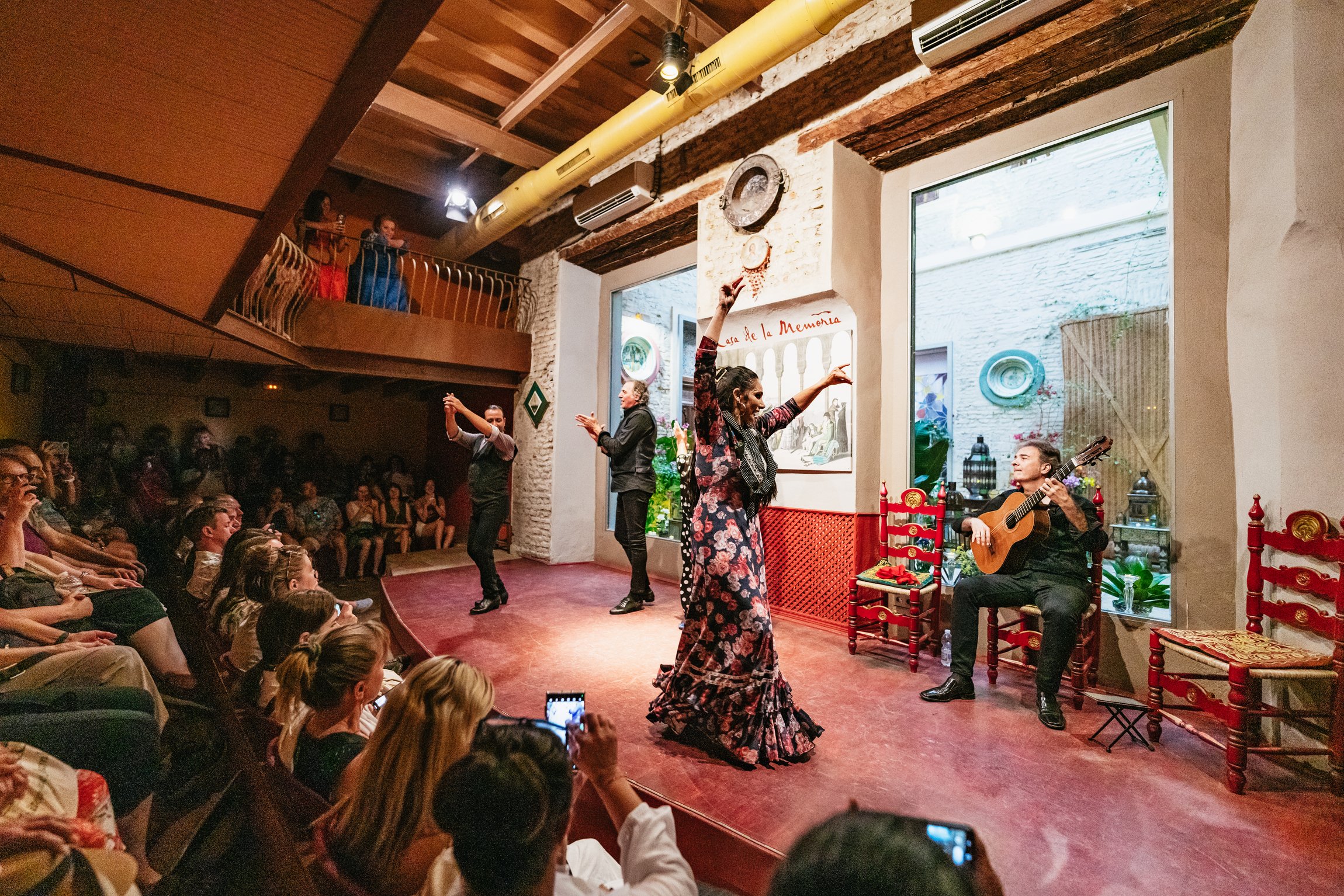
A 16th-century Moorish mansion, no microphones, around 40 unreserved seats — close enough to feel every heel through the floor. Arrive 30 minutes early. Every review uses the same word: real.
Book from €22 →Puro Flamenco + Museum
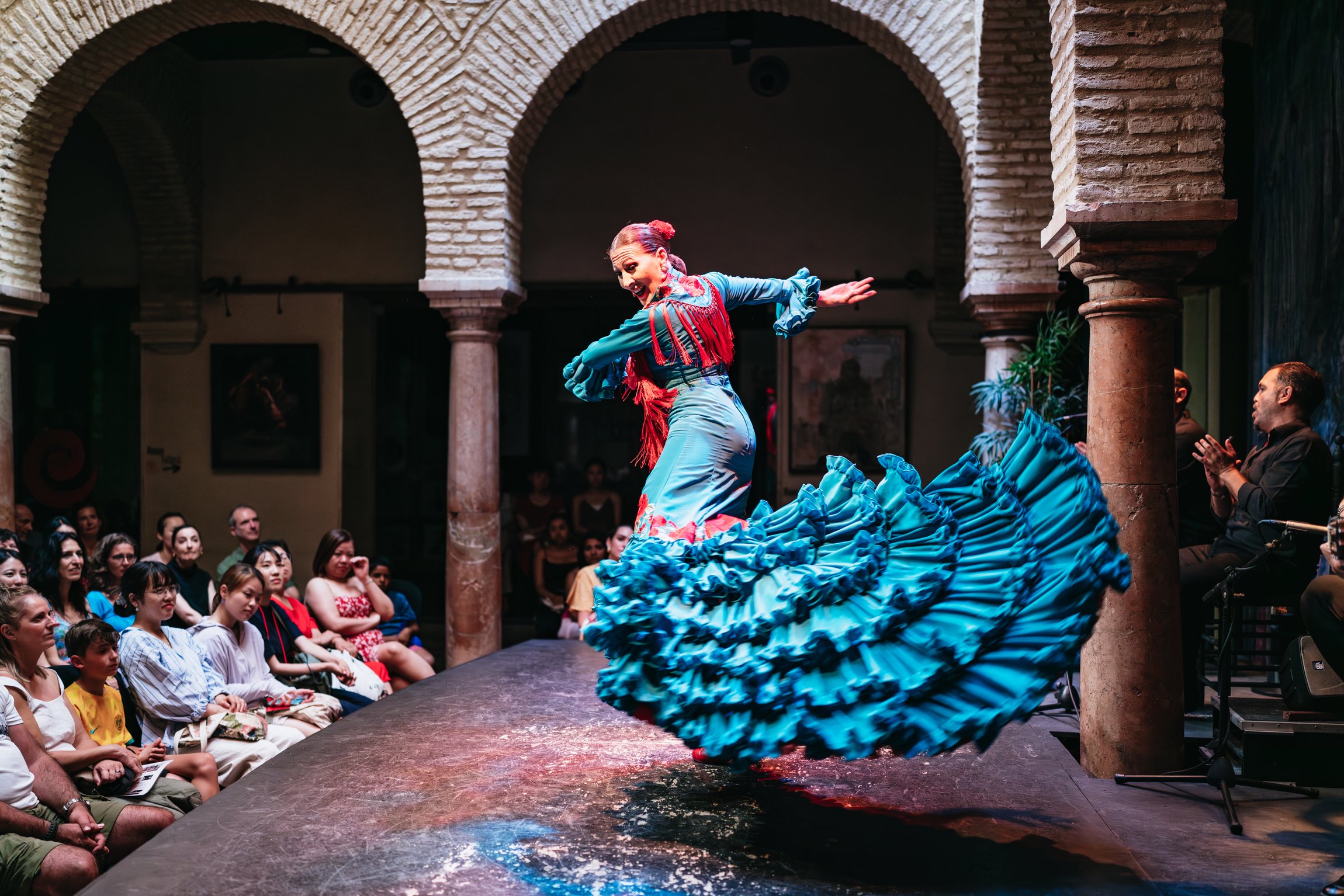
Set in an 18th-century building over a Roman temple, ringed by orange trees. The ticket includes daytime entry to the Museo del Baile Flamenco — the only flamenco dance museum of its kind. Seating is first-come.
Book from €25 →Baraka Sala Flamenca
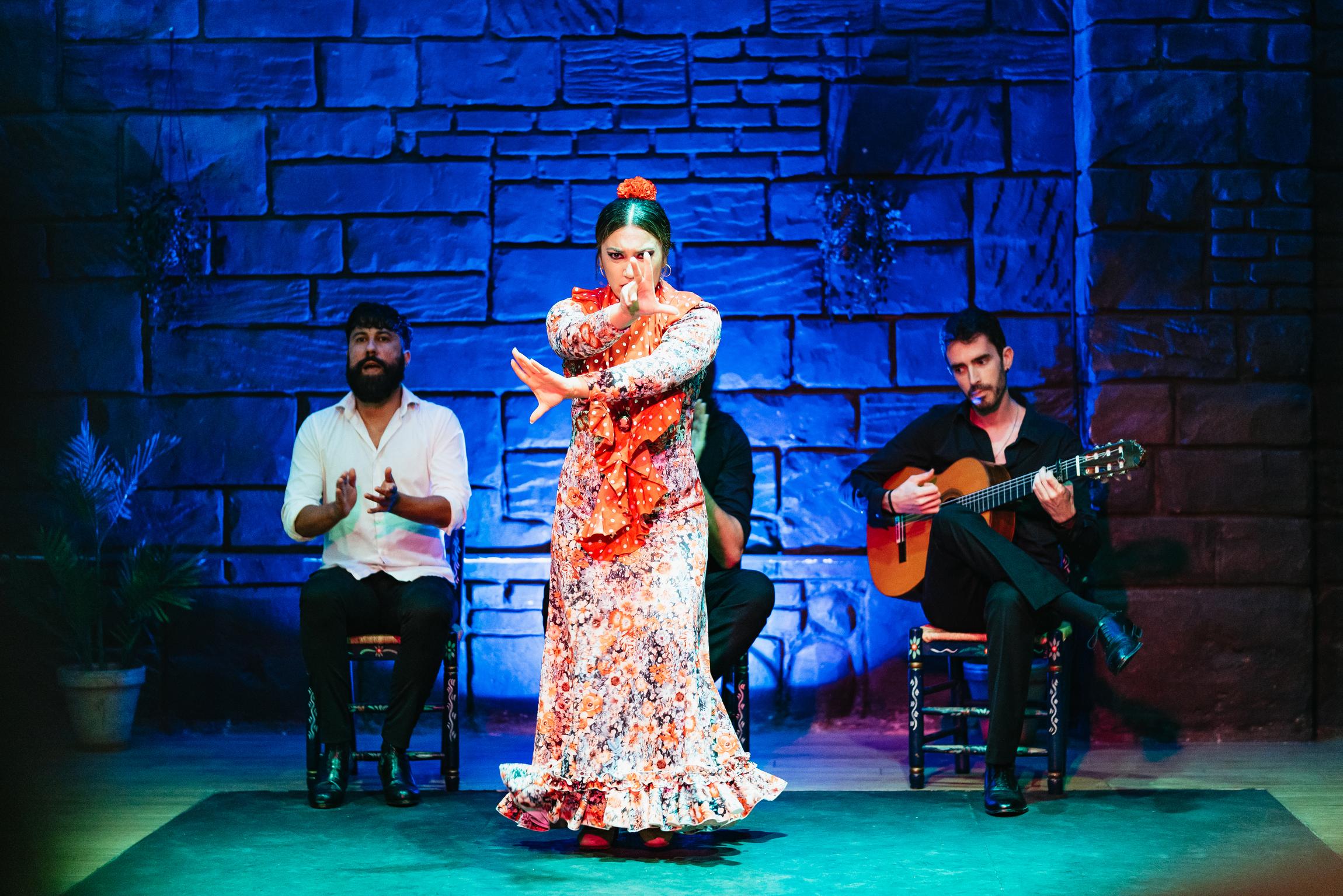
In Triana, the historic Gitano quarter across the Guadalquivir where flamenco was born. Four artists in an intimate riverside room; one drink included. The most accessible "local-feeling" tablao in the city.
Book from €27 →Where do locals go for flamenco in Seville?
The honest answer: locals who are serious about flamenco rarely set foot in a tourist tablao. They go to peñas flamencas — non-profit associations with irregular schedules, basement rooms, and an audience that knows every palo by heart.
Peña Torres Macarena, in the Macarena neighbourhood, is among the most respected, and Peña Flamenca El Placer de la Toná draws serious aficionados too. These are hard to attend without local knowledge: schedules aren't widely advertised, Spanish is essential, and the format is informal. That difficulty is the point — it keeps the room for people who came to listen.
La Carbonería (Calle Levíes, Santa Cruz) sits in between — free entry when you buy a drink, spontaneous sets, no guarantees but genuine atmosphere. It isn't a peña, but it's closer to the local experience than any ticketed show. If you're staying across the river, our Triana guide maps the bars where flamenco still breaks out unannounced.
New to the art? It helps to know what to wear, whether to bring children, and how Seville stacks up against Granada's cave flamenco before you choose. For background on the art form itself, the history of flamenco explains why Seville sits at its centre.
Triana — the Gitano quarter across the river where flamenco was born and still lives.
Is authentic flamenco in Seville worth it?
Yes — and more so here than anywhere else. Seville is the only city where flamenco is genuinely woven into daily life rather than performed at it, which is why the best rooms keep performances to a tight 60–90 minutes of real intensity. The performers treat it as a living tradition, the venues are historic, and the tickets — from €20 — make it one of the highest-value cultural experiences in Spain.
If you only do one flamenco night in Seville, make it an acoustic tablao: book Casa de la Memoria, arrive early for a front seat, and let the room do the rest. If you have a second evening and a little Spanish, chase down a peña. That's the route from "I saw a flamenco show" to "I understood why this city guards it so fiercely."